The race week carb loading checklist
This is the do-this version of carb loading. If you want the full science behind it, read Carb loading explained. If you just want a plan to follow in the days before your race, you are in the right place.
Carb loading works for any sustained event over about 90 minutes: marathons, 70.3 and full IRONMAN, long road, gravel and mountain bike races, ultras. Below 90 minutes you can skip it and eat normally.
Your one number
Everything below hangs off a single target: 10 to 12 grams of carbohydrate per kilogram of body weight, per day.
Body weightDaily carb target (10 g/kg)55 kg550 g65 kg650 g75 kg750 g85 kg850 g
Write your number down. Almost everyone who fails a carb load fails because they eat roughly half this and think they have done it.
Two days before the race
Hit your carb target (10 to 12 g/kg).
Cut fat and protein back to make room. You are changing the ratio, not eating more on top.
Keep training to a light spin, jog or full rest.
Drink to thirst. Glycogen stores water, so you will hold a little extra. That is the load working.
Spread carbs across every meal and snack rather than one giant dinner.
One day before the race
Hit your carb target again.
Start lowering fibre. Swap wholegrains and big salads for white rice, white bread and ripe fruit.
Keep fat low to avoid a heavy, slow gut.
Stick to foods you have eaten in training. Race week is not the time to try anything new.
Expect the scale to be up 1 to 2 kg. That is water bound to glycogen, not fat.
Race morning
Eat a familiar, carb-rich, low-fibre breakfast 2 to 4 hours before the start.
This tops up liver glycogen lost overnight. It is separate from the multi-day muscle load.
Sip fluid up to the start. Avoid anything high in fibre or fat.
Go-to carb loading foods
White rice, pasta and noodles, white bread, bagels, English muffins, potatoes and sweet potatoes, oats and low-fibre cereal, bananas and ripe fruit, fruit juice, sports drinks, honey, jam, maple syrup, pancakes and crumpets.
Ease off as race day approaches
High-fibre wholegrains and bran, large amounts of raw veg and salad, beans and pulses, high-fat foods that slow digestion, and anything untested.
The five things that sink a load
Eating too few carbs and thinking you loaded.
Stacking extra fat and protein on top instead of swapping them out.
Too much fibre too close to the start.
Trying new foods on race week.
Leaving it to a single pasta dinner the night before. The muscles need 24 to 48 hours.
Don't want to count it yourself
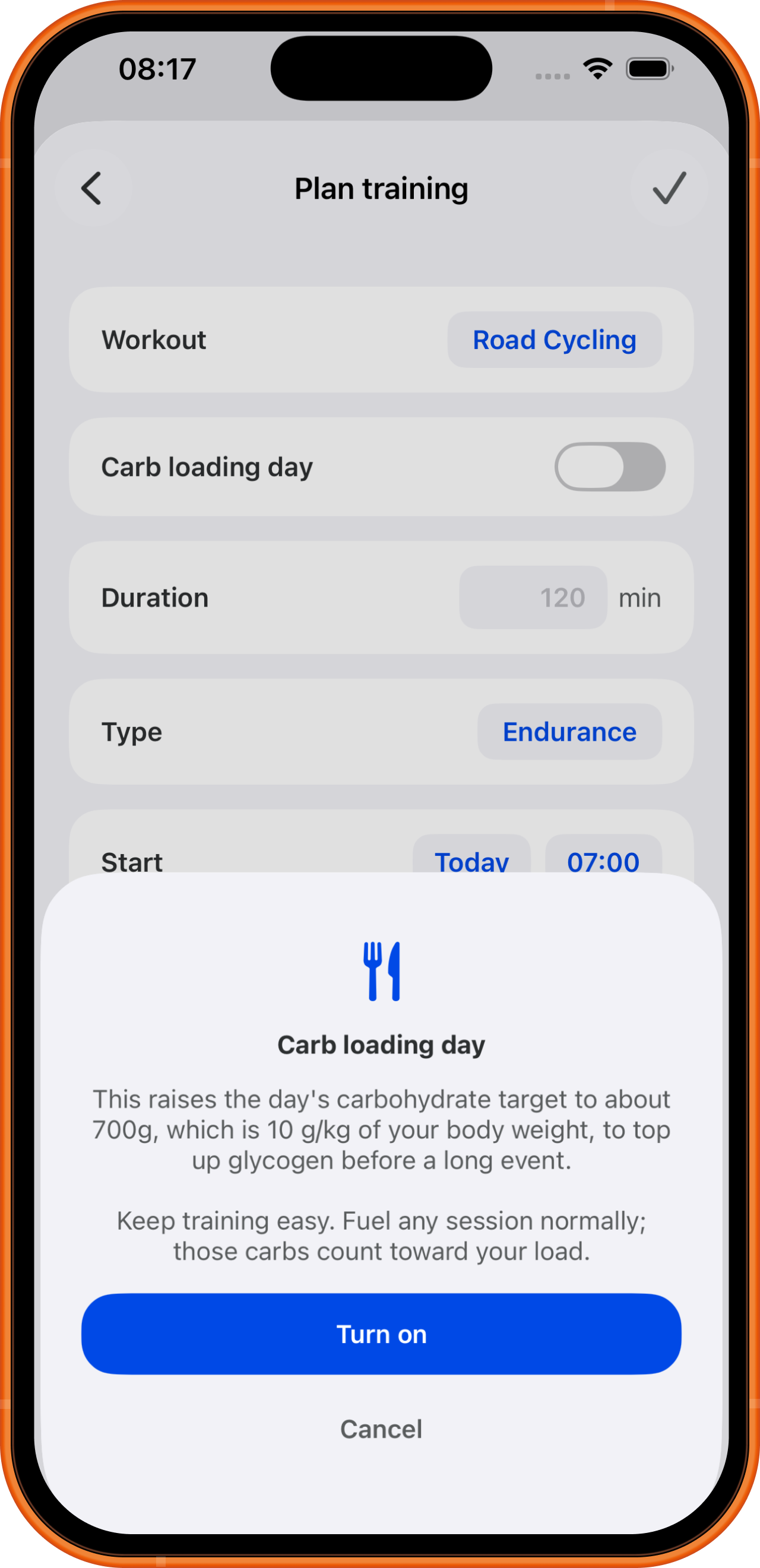
MOVE Nutrition works out your exact carb loading target from your body weight and race, then tracks your intake meal by meal across the loading window so you can see how much you have left to hit. It also plans your in-race carb, fluid and sodium targets, so a good load does not go to waste on the start line.
Free 14-day trial. Cancel before day 14 and you pay nothing.
Put this into practice
MOVE applies these principles automatically, personalised to your sport, weight and training load.
Download M0VE