How to calculate your sweat rate as a triathlete, and why it matters
Most triathletes drink reactively. A sip when thirsty, a bottle every hour out of habit. By the time you are thirsty, you are already dehydrated. By Hawaii or any hot race, habit does not cut it.
A proper sweat rate test takes 30 minutes and gives you a number you can use for every long workout from then on. Here is how.
What is sweat rate?
Your sweat rate is how many millilitres of fluid your body loses per hour while exercising. It is individual. Some athletes lose 500 ml/h, some lose 2,000 ml/h. Both ends are normal. What matters is your rate, because that is what determines how much you need to drink to maintain performance.
Drink less than your sweat rate and core temperature climbs, performance drops, GI distress increases. Drink way more than your sweat rate and you risk hyponatremia, low blood sodium, which is dangerous.
How to measure it (30 minute test)
You need:
A bathroom scale that reads in kg
Your normal water bottle
A typical training environment, ideally similar temperature and humidity to your race
Method:
Empty your bladder. Strip down to minimal clothing.
Weigh yourself. Note the weight. Call this
W1.Train for exactly 60 minutes at race-like intensity. Drink your normal amount of fluid. Track exactly how much you drank in ml. Call this
Vdrunk.After 60 minutes: strip again, towel off sweat. Use the bathroom only if absolutely necessary, and weigh the urine if you do.
Weigh yourself again. Call this
W2.
Sweat rate formula
Sweat rate (ml/h) = (W1 - W2) × 1000 + Vdrunk
Where weights are in kg.
Example:
W1 = 73.5 kg
W2 = 72.7 kg
Vdrunk = 500 ml
Sweat rate = (73.5 - 72.7) × 1000 + 500 = 1300 ml/h
You are losing 1.3 litres of fluid per hour at race intensity.
What about sodium?
Sweat does not just contain water. It contains electrolytes, primarily sodium. Sodium loss rates vary even more than sweat rates. Some athletes lose 200 mg/L, some lose 1,800 mg/L.
Getting precise sodium numbers requires a lab sweat test (companies like Precision Hydration and Levelen offer this). For most athletes, a reasonable starting estimate is 700 to 900 mg sodium per litre of sweat. Adjust up if you are a salty sweater, with white residue on kit, salty taste, occasional cramps.
Putting it into practice
Once you have your sweat rate:
Drink 70 to 80% of your sweat rate during intense rides and runs. Trying to match it 100% causes GI issues in most athletes.
For long races such as Ironman 70.3 and above: target 700 to 1,000 mg sodium per hour during the bike, 500 to 800 mg/h during the run.
Retest in different conditions. Your hot-weather sweat rate can be 50% or more higher than cool-weather. Test in both.
Why generic hydration advice fails
"Drink 500 ml an hour" is a useful starting point. But if your actual sweat rate is 1,500 ml/h, you will dehydrate every long session. The other way around: if your rate is 700 ml/h and you force down 1,000 ml/h because that is what people say, you will bloat, slosh, and probably DNF the run.
The fix is to use your own data, not someone else's.
Test it in M0VE
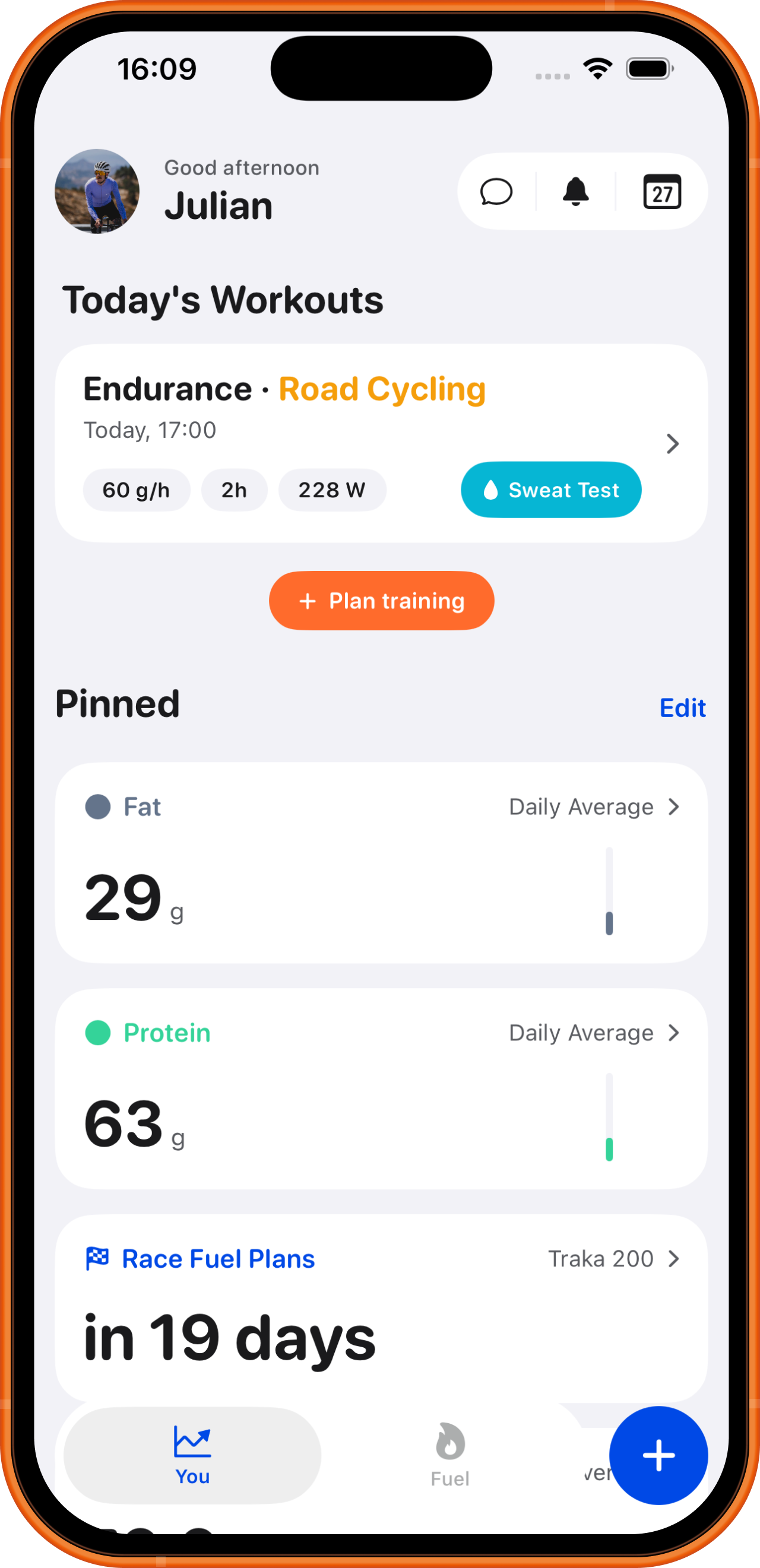
M0VE Nutrition includes a built-in sweat test calculator and tracks per-session fluid and sodium targets based on your conditions: temperature, intensity, duration. Test your rate, log it once, and your race-day plan adjusts automatically.
Free 14-day trial. Cancel before day 14 and you pay nothing.
Put this into practice
MOVE applies these principles automatically, personalised to your sport, weight and training load.
Download M0VE