Most nutrition apps track calories and macros. MOVE has always done more than that — adjusting your carbohydrate and calorie targets daily based on what your training actually demands. Today, we're extending that same approach to micronutrients.
Micronutrient tracking is now live for all Athlete and Coach plan users
What We Built
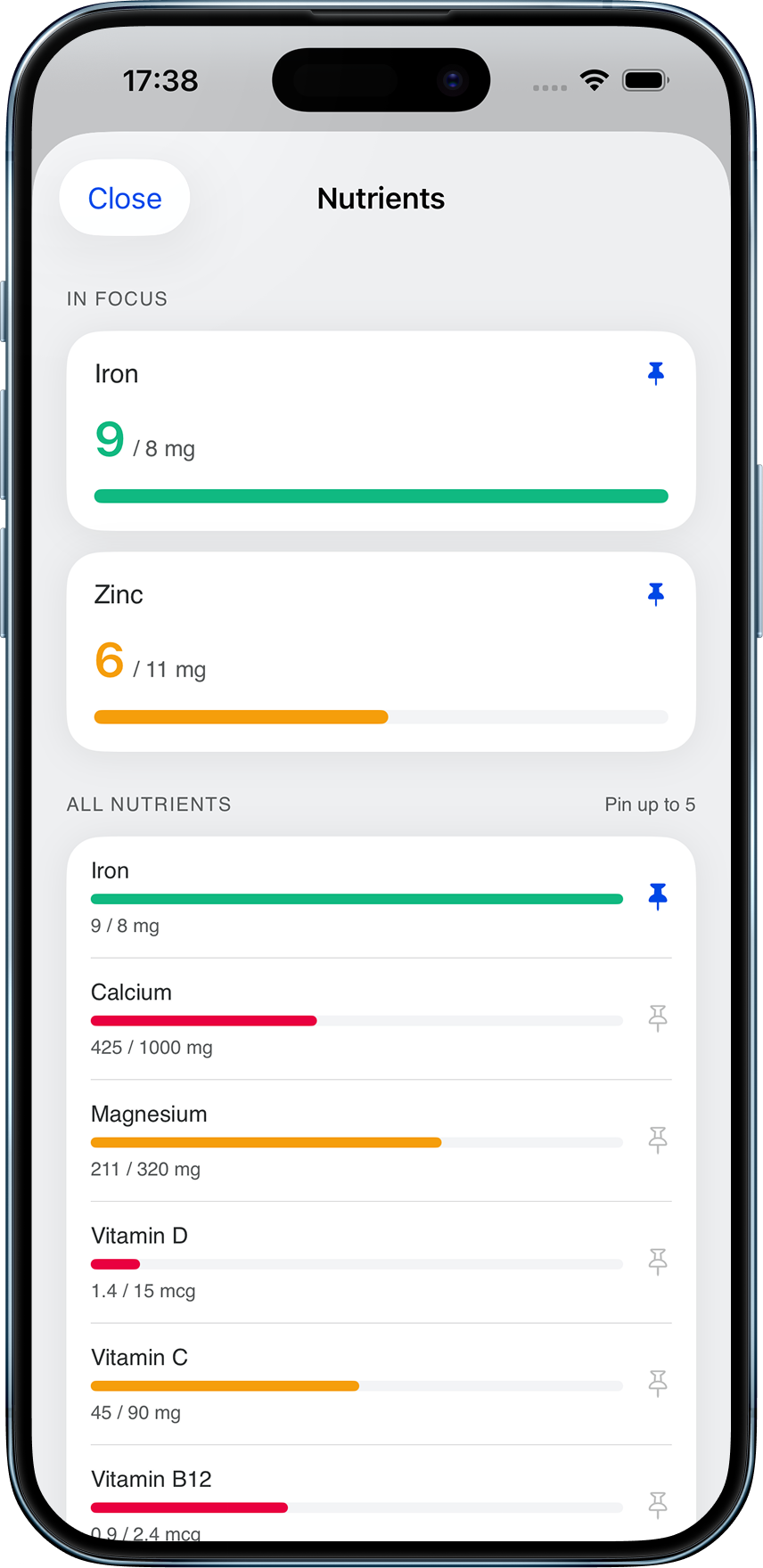
We track the 10 micronutrients that consistently show up in the research on endurance performance and recovery:
Iron — oxygen transport, VO2 max ceiling, and energy production. Chronically low iron is one of the most common hidden limiters in endurance athletes, particularly in female athletes and those doing high mileage.
Calcium — bone stress fracture risk is a real concern in high-load training blocks. Calcium intake often drops when athletes cut calories or avoid dairy.
Magnesium — involved in over 300 enzymatic reactions, including ATP production and muscle contraction. Sweat losses during hard sessions accelerate depletion.
Vitamin D — immune function, bone density, and emerging evidence for its role in muscle recovery and power output. Most athletes in northern latitudes are chronically deficient.
Vitamin C — collagen synthesis for tendon and ligament health, and a key antioxidant during periods of high training stress.
Vitamin B12 — red blood cell formation and neurological function. Plant-forward athletes and those avoiding animal products need to track this closely.
Folate — cell repair and DNA synthesis. Elevated during periods of high training load and particularly important during pregnancy or for female athletes.
Potassium — electrolyte balance, muscle function, and blood pressure regulation. Often underpowered in athletes focused on sodium replacement alone.
Omega-3 — inflammation management, cardiovascular health, and emerging evidence for reduced muscle soreness. EPA and DHA specifically support recovery.
Zinc — immune function and protein synthesis. Depleted through sweat and urine; easily overlooked against more prominent deficiencies.
Daily targets are personalised. Iron targets adjust for sex. Magnesium scales with body weight. Everything else is set to established dietary reference values — the same basis MOVE uses for your macros.
How Enrichment Works
Micronutrient data flows in from three sources — no manual entry required.
When you log food using AI text input (typing "grilled salmon with spinach"), Claude estimates micronutrient content as part of the same call that parses your macros. No extra steps, no second API call.
When you search via USDA FoodData Central, MOVE now pulls the full micronutrient panel alongside macros. The USDA database has excellent coverage for whole foods and many branded items.
When you scan or search via Open Food Facts, the micronutrient fields present in the product data are mapped and imported automatically.
Manual entries and custom recipes don't include micronutrient estimates — we'd rather show nothing than show a bad number.
Training Context
This is where MOVE differs from a standard nutrient tracker.
On hard training days, race days, and very hard load days, your needs for iron, magnesium, and sodium are elevated. Sweat losses accelerate depletion. Glycolytic demand increases. You need more.
When MOVE detects a hard day in your training log, a banner appears at the top of the nutrients view: "Heavy training day — iron, magnesium and sodium needs are elevated." Any nutrient that's below 80% of target on those days gets a visible flag so you know where to focus at your next meal.
On rest days and light training days, the view is quieter. You'll see the same data, but the urgency signals aren't there — because they don't need to be.
In Focus — Pinning What Matters to You
General nutrient tracking is useful. Targeted tracking based on your personal picture is more useful.
Athletes often come to MOVE with specific concerns — low ferritin flagged in bloodwork, a history of stress fractures, or a plant-based diet that puts B12 at risk. The In Focus feature lets you pin up to 5 nutrients to a dedicated section at the top of the view with a larger display: current intake, daily target, and a progress bar that fills through the day.
To pin a nutrient, tap the pin icon next to any nutrient in the full list. Pins sync to your profile and persist across devices and sessions. To unpin, tap again.
The empty state prompt: "Pin nutrients to track closely — great after bloodwork."
That's exactly the intended use case. Get your bloods done. See what's low. Pin it. Track it for 60 to 90 days.
Where to Find It
Open the Log tab. In the daily summary section beneath your macro targets, tap "View nutrients." This opens the full nutrients sheet.
The Nutrients view is also linked from the Progress tab, where 7-day trend cards for Iron, Vitamin D, and Magnesium sit alongside your existing macro trend data. The trend cards show your weekly average, compare it to the prior week, and mark progress toward your daily target.
Who Has Access
Micronutrient tracking is available to all Athlete and Coach plan users. It is not available on the Fuel plan, which is focused on on-bike fuelling calculations.
If you're on the Fuel plan and want access, you can upgrade from the Account tab.
A Note on Estimates
Micronutrient data from food databases is imperfect. Growing conditions, preparation methods, storage, and bioavailability all affect actual intake and absorption — none of which a food database captures.
Treat the numbers as directional. If you're consistently hitting 90% of your iron target, you're probably in good shape. If you're consistently at 30%, that's worth investigating with a blood panel and, if warranted, a conversation with a dietitian or doctor. MOVE gives you the signal. It doesn't replace clinical assessment.
That said, consistent directional data is far more useful than no data. Most endurance athletes have no idea whether they're getting enough magnesium or vitamin D on a daily basis. Now you do.